


 Written by David DinkinscontributorReviewed by Igor Belkinformer editor
Egypt’s Top Cleric Declares Bitcoin Trading ‘Unlawful’
Latest NewsPublishedJan 4, 2018
Grand Mufti Shawki Allam cited Bitcoin’s potential use in money laundering and supposed use in financing terrorism when issuing his ruling.
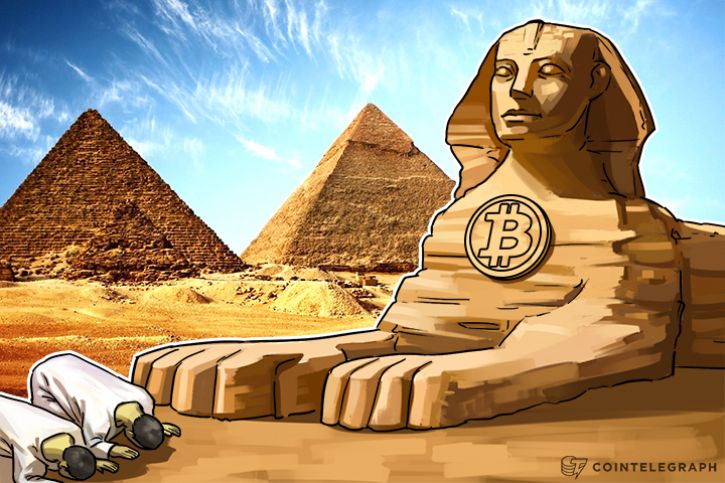
Egypt’s highest official of religious law, Grand Mufti Shawki Allam, called Bitcoin trading “unlawful” under Sharia law, online publication Ahram reported today. In the fatwa issued Monday, Allam wrote that Bitcoin isn’t an “acceptable interface of exchange” and is therefore unlawful to trade. The cleric also cited Bitcoin’s potential for money laundering and pointed out that because it isn’t subject to any government’s control, Bitcoin could potentially undermine the Egyptian economy.
Allam further stated that Bitcoin negatively affects “dealers’ legal safety” and that:
“Bitcoin is forbidden in Sharia as it causes harm to individuals, groups and institutions.”
One of the grand mufti’s advisors told BBC that Bitcoin is “used directly to fund terrorists.” Egypt’s government is also no fan of cryptocurrencies, having called Bitcoin a “form of deception that falls under legal liability.”
Halal or not?
Back in February 2017, Cointelegraph spoke to several experts about Bitcoin’s status under Sharia law. Matthew Martin of Blossom Finance explained his belief that Bitcoin is halal, writing:
“As a payment network, Bitcoin is halal. In fact, Bitcoin goes beyond what more conventional closed banking networks offer. Unlike conventional bank networks which use private ledgers where there’s no guarantee that the originator actually owns the underlying assets, Bitcoin guarantees with mathematical certainty that the originator of the transfer owns the underlying assets. Conventional banks operate using the principle of fractional reserve, which is prohibited in Islam.”
Matthews did agree that Bitcoin isn’t likely to be considered money under Islamic law:
““Historically, though, Islam has only recognized commodities of intrinsic value as money including things like gold (Dinar), silver (Dirham); rice, dates, wheat, barley and salt. In a strict interpretation of what qualifies as money, Bitcoin probably misses the mark.”
Subscribe to daily byte-sized crypto news from Cointelegraph
Cointelegraph is committed to independent, transparent journalism. This news article is produced in accordance with Cointelegraph’s Editorial Policy and aims to provide accurate and timely information. Readers are encouraged to verify information independently.
More on the subject